Maille has been making mustard for 270 years. While the recipe remains a well-kept secret, this is our mustard-making process.
__________________________________________
Skip to content:
Skip to content:

Maille has been making mustard for 270 years. While the recipe remains a well-kept secret, this is our mustard-making process.
__________________________________________
Bonjour Bonjour!
Before explaining how we make mustard from seeds, we will introduce a miracle of nature.
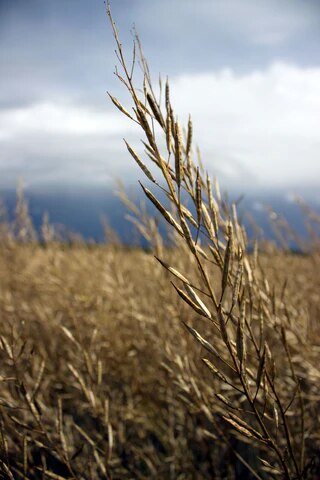
The mustard flower, so vibrant, fragrant and inviting is like a wounded soul, that turns inwards, creating thorns and changing to a rather sad beige.
That is until you realise that the beauty now lays within.
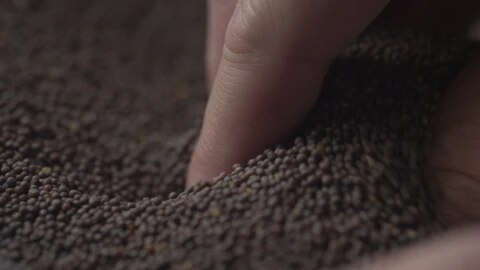
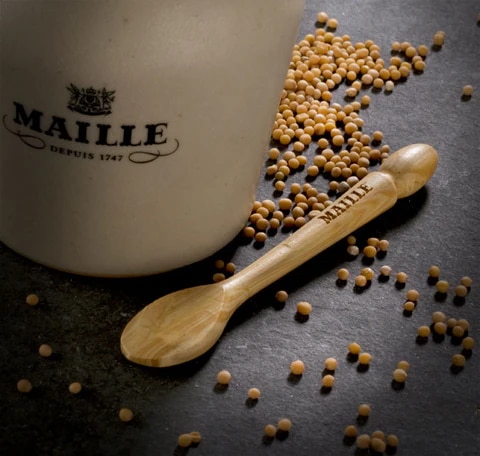
By the end of June, the flowers of the mustard plant grow into a small green pod, which within three weeks turns a beige coloured, dry looking pod with a thorn on the top. If you rub the pod a bit, you will find it hides a small amount of mustard seeds: small but sturdy, bitter but pungent. Brown yet vibrant yellow on the inside, this little miracle of nature has opened endless food possibilities for over 6000 years.
The harvest happens at a very specific moment - it's a fine line between leaving the pods long enough in the sun to increase selenium, responsible for the pungency of mustard, and the rainy season. Once harvested, the pods are left to dry in huge sieves in dry silos. When dried, the seeds fall out of the pods, which are further shaken to make sure all seeds are released.
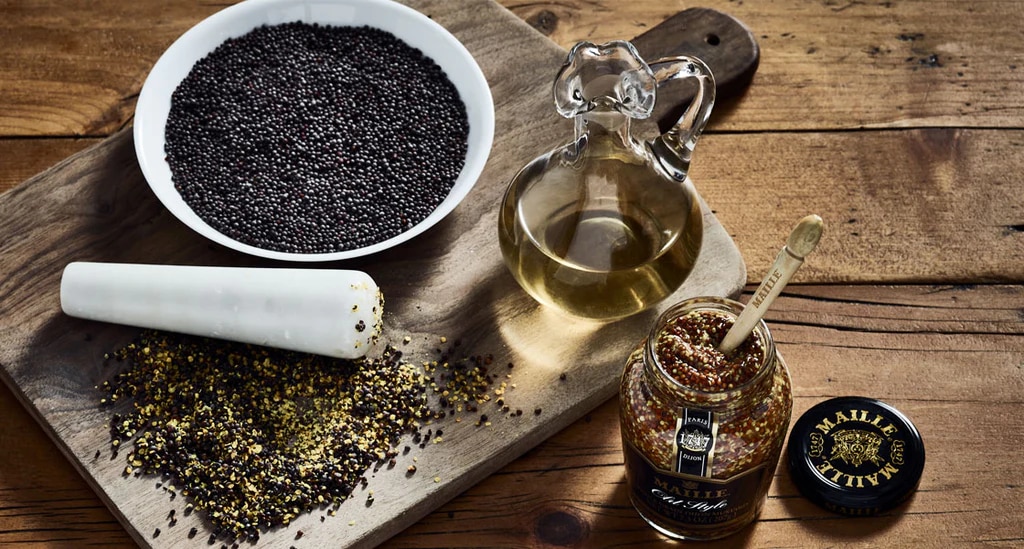
Though our mustard making recipe is a closely guarded secret, we have a tip for you: you too can make your own flavored mustard at home!
The longevity of the mustard will depend on the ingredients you choose but in most cases we'd recommend to use your prepared mustard within 2 weeks.
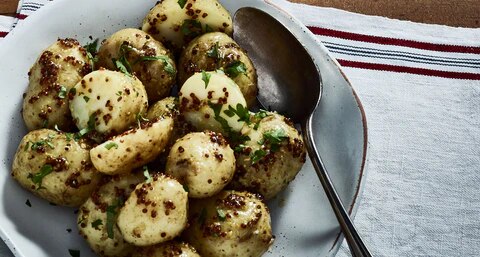
For those seeking recipe inspiration, here is how to make mustard potato salad. Consider these options for Oktoberfest: Grilled Pocket Potato Salad and German Potato Salad.
The journey from seed to spoon reveals the versatility of mustard, which has inspired numerous food possibilities. You can explore this by making your own flavored mustard at home or by trying recipes like Grilled Pocket Potato Salad and German Potato Salad.
À la prochaine,
Les Bloggers Maille
The harvest timing for mustard seeds is very specific. It's a balance between allowing the pods enough sun exposure to increase their selenium content, which enhances pungency, and avoiding the start of the rainy season.
After being harvested, the mustard pods are placed in large sieves within dry silos to dry out. As they dry, the seeds naturally fall out of the pods, which are then shaken to release any remaining seeds.
According to an original Dijon recipe, the mustard seeds are cut and separated from their husks during processing. No more than 25% of the husk is permitted to remain in the final mixture.
A variety of ingredients can be added to the mustard seeds to create different flavors. Depending on the desired result, additions can include salt, white wine, white wine vinegar, fruits, spices, herbs, and even liquors or spirits.
To make your own flavored mustard, add your chosen ingredients to a Dijon base and let the mixture infuse for 48 hours. For best results, it is recommended to use your prepared mustard within two weeks.